Thousands of Drains. Millions of Passengers. Zero Tolerance for Odor.
Airport terminals operate at a scale where manual drain maintenance is impractical and odor is unacceptable. Green Drain seals every floor drain with a mechanical barrier that requires minimal maintenance, across every restroom, food court, gate area, and mechanical space in the terminal.
Who this page is for.
Whether you are managing facility operations across a major airport, overseeing terminal building systems, or specifying drain infrastructure for a new concourse, this page provides the performance data, certifications, and operational context you need to evaluate waterless trap seal technology at airport scale.
Airport Facility Managers
You manage thousands of drains across terminals, concourses, and support buildings. You need a drain solution that scales without adding labor hours, eliminates odor complaints, and installs without disrupting terminal operations.
Terminal Building Managers
You are responsible for the passenger experience and building conditions within your terminal. Restroom odors, food court drain issues, and gate area complaints come to your desk. This page covers the data and certifications behind a permanent solution.
Airport Authority Engineers
You specify building systems for new construction and renovation projects. Green Drain is cUPC listed, ASSE 1072-2020 compliant, and can be specified under CSI MasterFormat section 22 13 16 for terminal construction.
Operations Directors
You oversee the operational efficiency of the entire airport. Every maintenance task that can be eliminated at scale frees resources for higher-priority work. This page presents the case for removing drain seal maintenance from your operations entirely.
At airport scale, drain maintenance is a logistics problem.
A major airport terminal can have hundreds to thousands of floor drains. Every restroom, food court, gate area, baggage handling zone, mechanical room, and utility corridor has drains that connect occupied spaces to the sanitary drainage system. Each one relies on a small volume of water in a P-trap to prevent sewer gas from entering the terminal.
That water evaporates. In restrooms that close overnight, in seasonal gates that shut down for months, in concourses under renovation, and in mechanical rooms that receive infrequent attention, traps dry out and drains become open pathways for sewer gas, odors, and pests to enter the terminal environment.
Terminal floor plan showing
distribution of floor drains across
restrooms, food courts, gates, mechanical
~760 x 400px
The passenger experience factor
Airport passengers have zero tolerance for odor. A sewer gas smell in a restroom, food court, or gate area generates complaints, social media posts, and negative impressions of the facility. Airlines, concession operators, and airport authorities all share the reputational impact. The problem is especially visible in high-traffic restrooms where drains are the most likely source of persistent odor that cleaning cannot resolve.
Seasonal gates and secure-area access
Many airports operate seasonal gates and concourses that close during off-peak periods. During closure, no water flows through the drains. P-traps dry out completely. When the concourse reopens, the first passengers walk into an environment where every drain has been unsealed for weeks or months. The odor is immediate and the remediation is reactive rather than preventive.
Access to drains in secure areas adds another layer of complexity. Maintenance work in post-security zones requires coordination with TSA, badged personnel, and security protocols. Every drain maintenance visit in a secure area has an administrative overhead that multiplies the true cost of manual flushing or trap primer servicing. A device that eliminates the need for maintenance visits to secure-area drains eliminates that overhead entirely.
High-density drain aerosol risk
Airports process millions of passengers from around the world. Restroom drains in these environments are exposed to a higher density and diversity of biological material than almost any other building type. In the post-pandemic environment, public health authorities and passengers alike are more aware of environmental transmission pathways. Floor drains that emit aerosols from the waste system represent an addressable risk in high-traffic public facilities.
Food court compliance
Airport food courts and concession areas are subject to health department inspections. Floor drains in food preparation and dining areas must maintain seal integrity for food safety compliance. When food court drains emit odors, it affects not only compliance but also customer perception and concession revenue. NSF/ANSI 2 certified and HACCP International certified drain seals support food safety standards in these environments.
Why traditional approaches fall short at airport scale.
Trap Primers
Across thousands of drains, trap primer systems represent a massive water consumption and maintenance burden. A single trap primer can consume over 52,000 gallons per year. Multiply that across a terminal and the water cost alone is significant. When primers fail (and at scale, they do), the drains they serve go unsealed.
Manual Flushing
Flushing thousands of drains on a regular schedule requires dedicated labor hours that most airport operations teams cannot justify. In secure areas, each flushing visit requires badged personnel and security coordination. Drains are inevitably missed, especially in low-traffic and seasonal areas where they are needed most.
Reactive Cleaning
Cleaning crews respond to odor complaints by cleaning the area around the drain. But the odor source is below the drain grate, in the open pathway between the sewer system and the terminal. No amount of surface cleaning resolves a sewer gas problem. The complaint recurs because the root cause is an unsealed drain, not a dirty floor.
How Green Drain solves it.
A one-way silicone valve that drops into the existing floor drain body. Water flows down normally. The valve physically blocks gas, odors, pests, and aerosols from traveling back up through the drain. No water required. No power. Minimal maintenance. Scales to thousands of drains without adding a single labor hour.
Green Drain valve in drain body
Open (water flowing) vs. Closed (sealed)
~900 x 360px
Maintenance at scale
Once installed, Green Drain requires nothing. No water to add. No valves to inspect. No chemicals to apply. No flushing schedule to manage. Across thousands of drains in a terminal complex, this represents a significant elimination of labor hours and work orders from your operations program.
Aerosol retention
In an SGS aerosol-retention test, the GD3 retained over 99.9% of an aerosolized MS2 bacteriophage viral surrogate. In high-traffic public facilities processing millions of passengers, restricting the upward movement of aerosols from drain systems supports post-pandemic public health standards.
Continuous mechanical seal
The silicone valve maintains a seal around the clock, through overnight closures, seasonal gate shutdowns, and renovation periods. Drains in closed concourses remain sealed for months without any intervention. No evaporation. No failure mode.
Installation per drain
Remove the grate, drop the device in, press to seat, replace the grate. No tools. No plumbing modifications. A crew can install across an entire concourse in a single shift without closing restrooms or disrupting passenger flow.
Application areas in airport facilities.
Green Drain fits every drain size found in airport construction. The following areas represent the highest-priority applications for terminal operations.
Terminal Restrooms
High-traffic restrooms are the most visible source of drain odor complaints in airports. Floor drains in these areas serve wash-down and overflow collection. Overnight closures and reduced traffic periods allow traps to begin drying, and odor is noticeable the moment passenger traffic resumes.
Food Courts and Concessions
Airport food court floor drains require seal integrity for food safety compliance. NSF/ANSI 2 certification and HACCP International certification apply. Odor from food court drains affects customer experience and concession operator satisfaction. Health department inspections cover these areas.
Seasonal and Closed Gates
Gates and concourses that close during off-peak seasons have drains that receive no water for weeks or months. These are the highest-risk locations for trap seal failure. Green Drain keeps every drain sealed throughout the closure period, ready for reopening.
Secure-Area Drains
Post-security drains require badged personnel for any maintenance visit. Eliminating the need for maintenance visits to these drains removes the security coordination overhead from drain seal management. Install once per cycle, no return visits between inspections.
Baggage Handling Areas
Baggage handling zones have large floor drains that serve equipment wash-down and water collection. These below-grade areas are vulnerable to sewer gas accumulation, similar to confined-space risks in other industrial environments.
Mechanical and Utility Rooms
Central plant areas, chiller rooms, and utility corridors have large floor drains that receive condensate and equipment drainage. These low-traffic areas are prime locations for trap seal evaporation and are often the last to receive maintenance attention.
Maintenance worker installing
Green Drain in terminal restroom drain
~580 x 380px
Completed installation in
airport food court floor drain
~580 x 380px
Certifications that matter for airports.
Green Drain holds six product certifications (cUPC, WaterMark, NSF/ANSI 2, CE / ETA-18/0536, Saber, and HACCP International), backed by independent test reports. The following are most relevant for airport specification and procurement.

cUPC / ASSE 1072-2020
Plumbing code certification (IAPMO File 9301) confirming Green Drain meets barrier-type floor drain trap seal protection device requirements. IAPMO tested: 32g opening force, 276 L/min max flow (GD4), 2,500+ cycle life, >96% evaporation reduction. Required for code compliance in airport construction projects.
NSF/ANSI 2 (with HACCP International certification)
NSF/ANSI 2 material safety certification for food-contact environments, backed by a HACCP International food safety certification (Certificate RG-05). Supports food safety compliance in airport food courts, concession areas, and airline catering kitchens where health department inspections apply.
SGS Aerosol-Retention Test Report
Independent test report (not a certification). In a controlled bench test, the GD3 retained over 99.9% of an aerosolized MS2 bacteriophage viral surrogate (ATCC 15597-B1). Report QDF25-0049810-01. In high-traffic public facilities processing millions of passengers, restricting the upward movement of aerosols from drain systems supports public health standards.

CE / ETA-18/0536
European Technical Assessment verifying 200 Pa odour tightness, Class A thermal resistance, mechanical resistance exceeding 400 Pa, and tested flow rates. Relevant for international airport projects and facilities meeting European building standards.
Regulatory and code context.
Understanding where Green Drain fits within airport construction codes and health regulations helps airport engineers and facility managers incorporate drain sealing into terminal specifications and procurement.
ASSE 1072-2020: Barrier-Type Floor Drain Trap Seal Protection Devices
This is the ASSE standard that defines performance requirements for waterless trap seal devices. Green Drain is tested and listed under this standard. When specifying for new terminal construction or concourse renovation, reference ASSE 1072-2020 as the performance standard for barrier-type WTSPD.
Health Department Food Safety Inspections
Airport food courts and concession areas are subject to local health department inspections. Floor drain conditions in food preparation and dining areas fall within inspection scope. NSF/ANSI 2 certified and HACCP International certified drain seals support compliance in these areas and provide documentation for inspection readiness.
CSI MasterFormat 22 13 16: Sanitary Waste and Vent Piping
For airport architects and specifiers, Green Drain can be included in construction specifications under CSI MasterFormat section 22 13 16. Specify as "barrier-type floor drain trap seal protection device per ASSE 1072-2020, cUPC listed." Applicable to new terminal construction and major renovation projects.
Recommended products for airports.
Airport floor drains range from 2" in restrooms to 6" in mechanical and baggage handling areas. All models share the same silicone valve design and certification portfolio.
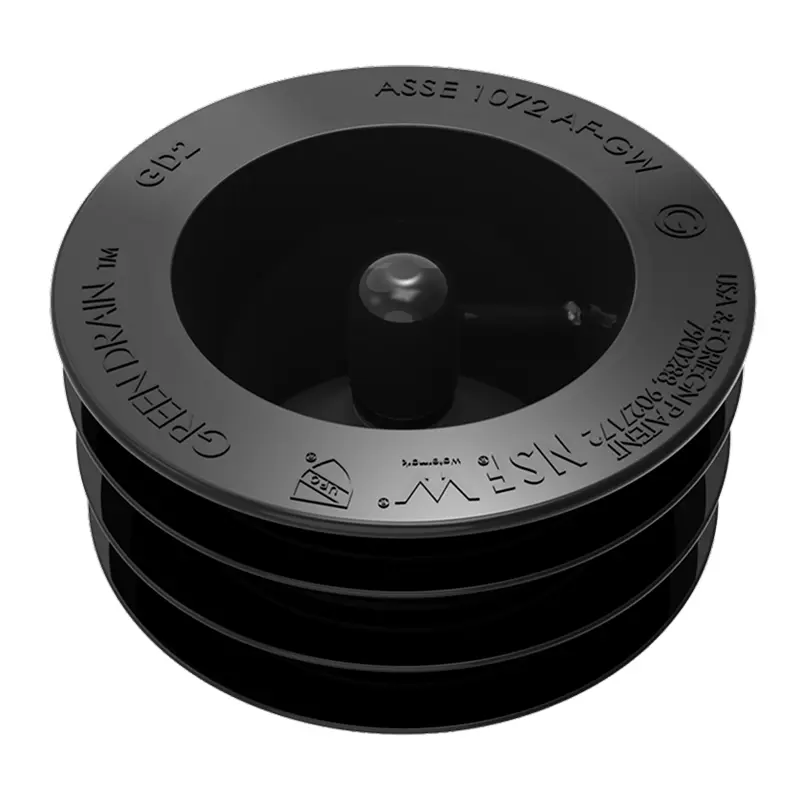
2" Waterless Trap Seal
Restroom floor drains, gate area drains, lounge drains
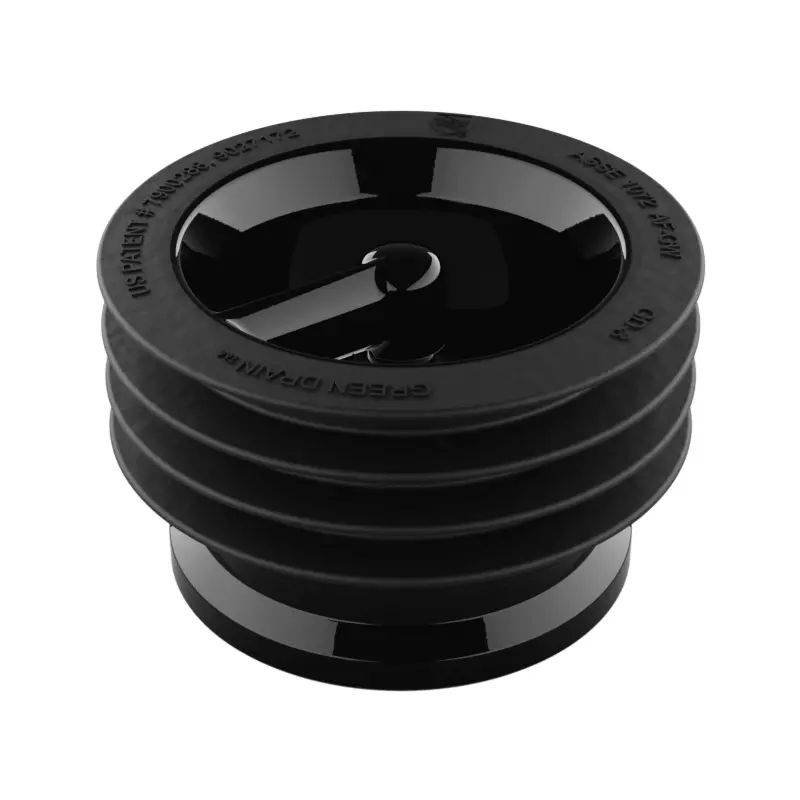
3" Waterless Trap Seal
Food court drains, concourse drains, utility corridor drains
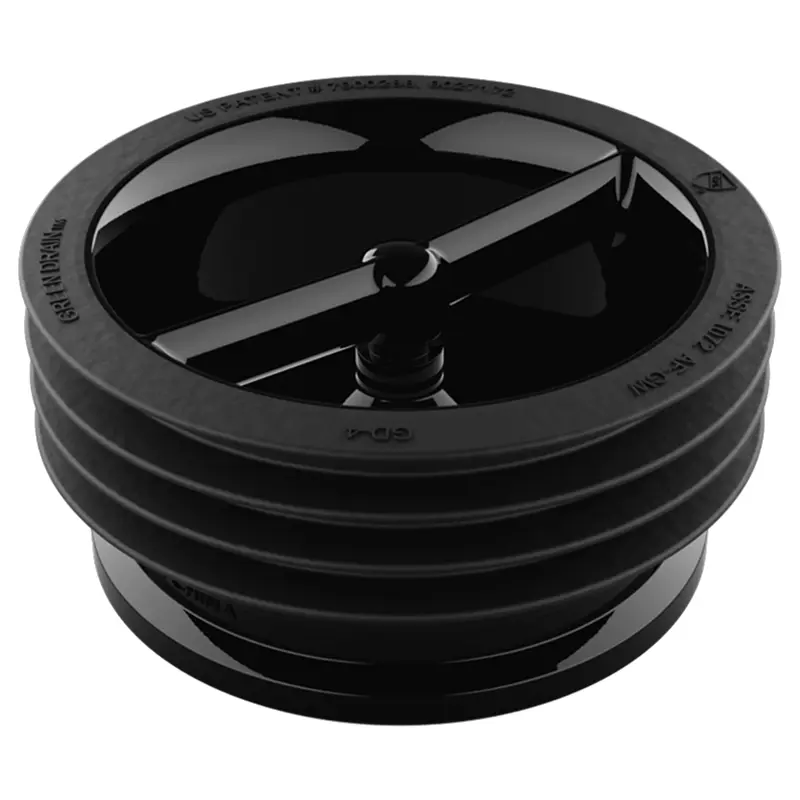
4" Waterless Trap Seal
Kitchen drains, mechanical room drains, large restroom drains
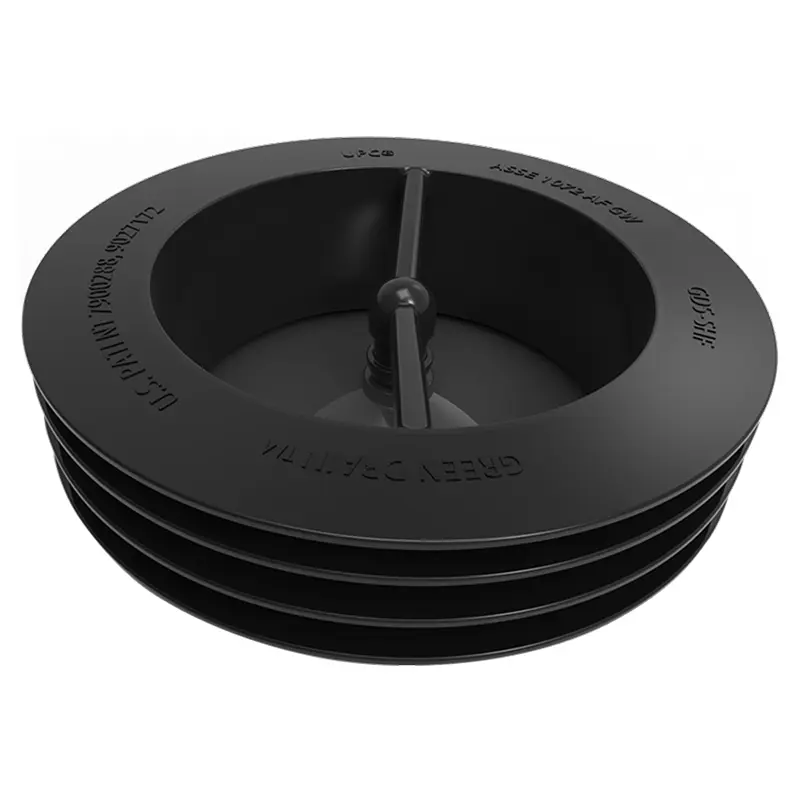
5" Waterless Trap Seal
Baggage handling drains, large utility drains, equipment wash areas
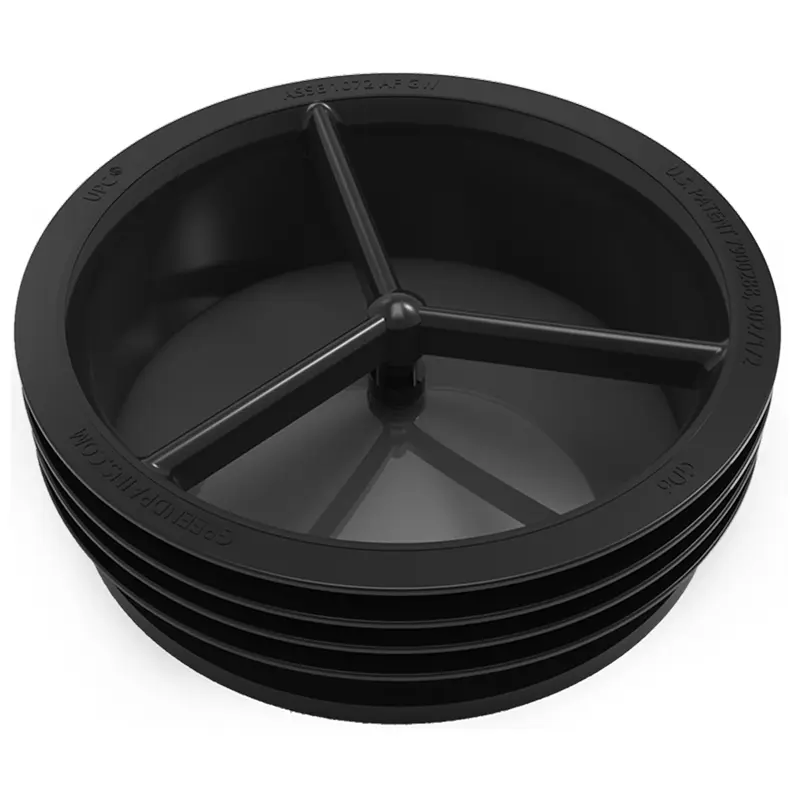
6" Waterless Trap Seal
Central plant drains, large mechanical room drains, ramp-level drains
Airport Drain Management Brief
A concise summary of drain seal challenges at airport scale, certification data, specification language for terminal construction, and product sizing across restroom, food court, and mechanical applications. Share with your engineering team or include in your next terminal improvement plan.
- Scale analysis for terminal-wide drain seal programs
- Food court compliance and NSF/HACCP documentation
- CSI specification language for airport construction
- Product sizing guide for airport drain types
Request a Copy
Want this for your facility? Talk to our team for the underlying data, certification results, and specification language.
Contact UsFrequently asked questions.
Why do airport terminal floor drains smell?
Airport terminals have hundreds to thousands of floor drains across restrooms, food courts, gate areas, and mechanical spaces. Many of these drains receive infrequent water flow, especially in seasonal gates, closed concourses, and overnight periods. When the P-trap water evaporates, the drain becomes an open pathway for sewer gas to enter the terminal. The scale of the problem, combined with high passenger expectations, makes odor from unsealed drains a persistent operational challenge.
How many floor drains does a typical airport terminal have?
A major airport terminal can have hundreds to thousands of floor drains across restrooms, food court areas, gate concourses, mechanical rooms, and utility spaces. Each drain requires a functioning trap seal to prevent sewer gas entry. Managing seal integrity across this scale with manual flushing or trap primers is a significant operational burden.
Can Green Drain be installed in secure airport areas without disruption?
Yes. Green Drain installs in approximately 30 seconds per drain. Remove the grate, drop the device into the drain body, press to seat the gasket, and replace the grate. No tools, no plumbing modifications, and no disruption to terminal operations. Installation can be completed during low-traffic periods without closing restrooms or concourse areas.
Is Green Drain certified for airport food court drains?
Yes. Green Drain carries NSF/ANSI 2 certification for food equipment material safety and HACCP International certification (Certificate RG-05). These certifications support food safety compliance in airport food courts, restaurants, and concession areas where health department inspections apply.
How does Green Drain handle seasonal or closed gate areas?
Seasonal gates and closed concourses are among the highest-risk drain locations in airports because they receive no water flow during closure periods. P-traps in these areas dry out completely, allowing sewer gas to enter the space. Green Drain maintains a mechanical seal regardless of water flow, keeping closed areas sealed until they reopen.
What is the maintenance requirement for Green Drain in airports?
Zero. Green Drain requires no water, no power, no chemicals, and no staff time after installation. For airport operations teams managing thousands of drains, eliminating drain seal maintenance from the task list represents a significant reduction in labor hours and work orders.
Seal the drains. Eliminate the odor.
Every unsealed floor drain in your terminal is an open pathway for sewer gas odor, pest entry, and drain aerosols that no amount of cleaning can resolve. The problem is not the floor. The problem is the open pipe beneath it.
Green Drain does not replace your existing plumbing infrastructure. It supplements your P-traps with a mechanical seal that never fails due to evaporation, seasonal closures, or maintenance gaps. The device works with the drain systems already installed in your terminal.
At airport scale, the operational savings from eliminating drain maintenance across thousands of drains, combined with the elimination of odor complaints and the improvement in passenger experience, make the case clear. The solution installs in 30 seconds per drain.
Ready to seal every drain in your terminal?
Request a sample, get a terminal-wide quote, or talk to an airport specialist.